Use Case: Green Planet Energy – Economic evaluation of automatic Frequency Restoration Reserve with TOP-Energy and Python

How economically viable is it for an electrical battery storage system to participate in the aFRR market (secondary control market)?

Julian Franz from Green Planet Energy asked this question as part of a use case for the systemic evaluation of storage marketing strategies. For a well-founded analysis, Green Planet Energy combined model-based simulation with TOP-Energy and external market data processing with Python—connected via the REST API from TOP-Energy.

The objective was to evaluate the provision of automatic Frequency Restoration Reserve (aFRR) in a technically correct, regulatory-compliant, and economically precise manner—and to compare it with alternative market strategies such as day-ahead trading.

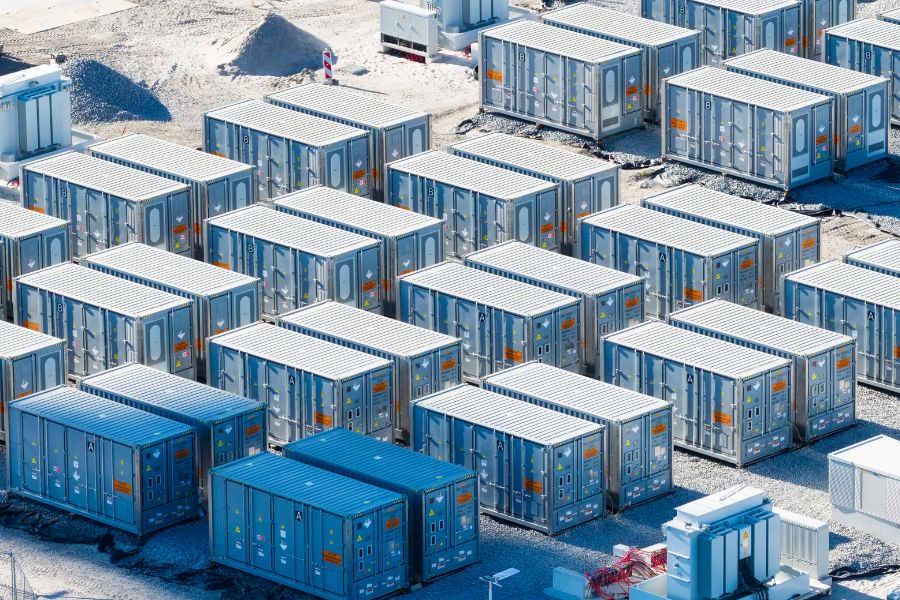
Challenge: Is it worthwhile for a battery storage system with 60 MWh/60 MW to provide secondary control power (aFRR) all year round?

To answer this question, numerous technical and economic aspects had to be taken into account:

  • the performance and working prices of the aFRR market,
  • the actual positive and negative control energy called up,
  • aging effects due to physical current flows,
  • possible cannibalization effects vis-à-vis the day-ahead market,
  • and regulatory requirements, such as the exclusive provision of energy for control reserve.

The historical market data required for the evaluation, such as merit order lists and control deviations, were freely available on the Internet as time series, but had to be processed and systematically integrated.

Solution With TOP-Energy

TOP-Energy offers a powerful REST API that allows external applications—such as Python simulations—to import and export data. Julian Franz used this interface to integrate results from an external market analysis directly into the TOP-Energy simulation.

Among other things, the following were used:

  • the “Balancing Power” component, which models power reserve, current flows, and revenues,
  • „Electricity Direction Pointer“ and control components to correctly map system specifications,
  • time series recording of historical prices and power every 15 minutes,
  • and the comparison of marketing variants, including the day-ahead market.

The Python-based calculations determined the actual control reserve provided by a plant depending on market conditions. This information was automatically transferred to the TOP-Energy model, representing the actual flow of electricity with its corresponding influence on the profitability calculation.

The Result: a year-round aFRR marketing

TOP-Energy presented the year-round aFRR marketing in a technically correct manner—as an energy system with all market and operating restrictions. The software calculated the following:

  • annual revenues from aFRR,
  • the aging stress on the battery storage system,
  • and the economic advantage compared to alternative direct marketing.

Through the combined use of TOP-Energy and external Python simulations, Green Planet Energy was able to reliably determine whether aFRR provision was economically viable for the storage system in question.

Target Groups of TOP-Energy: Who Benefits From the Software?

  • Direct marketers and energy suppliers
  • Project developers
  • Energy market analysts

Energy for a Climate-Friendly Future: about Green Planet Energy

Green Planet Energy is a nationwide energy cooperative based in Hamburg. Its goal: a climate-friendly, independent, and democratically organized energy supply. The company supplies green electricity and green gas, invests in renewable energies, and promotes innovative projects for the energy transition—cooperatively, transparently, and sustainably.